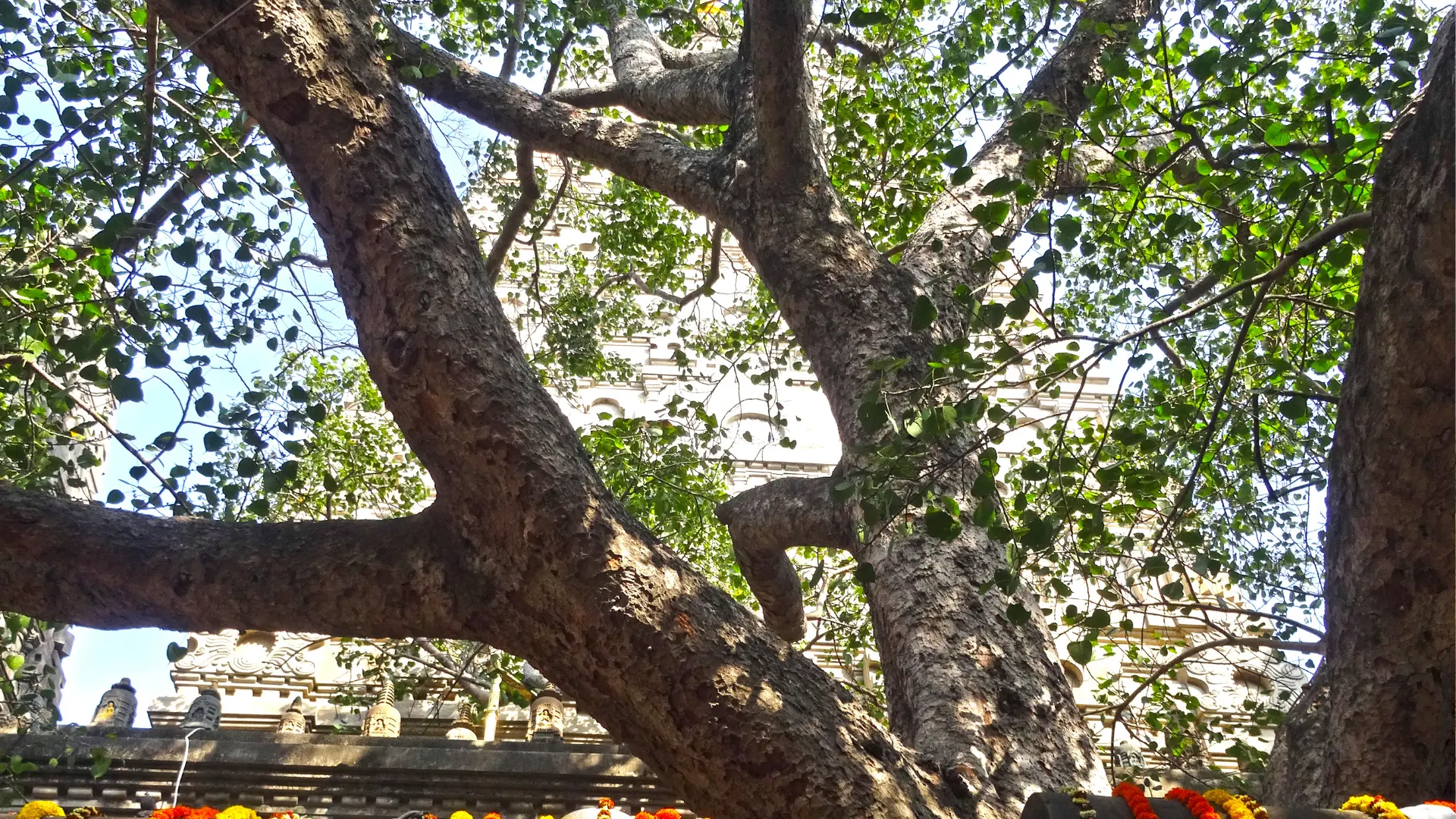
The Sacred Bodhi Tree at Bodh Gaya: 7 Incredible Facts Every Buddhist Must Know
Every great journey has a center. For the Buddhist Circuit—that sacred trail across the plains and foothills of India and Nepal, where the life of the Buddha unfolded like a slow, quiet miracle—the center is a tree.
It stands in Bodh Gaya, in the northern Indian state of Bihar. It is a Ficus religiosa, unremarkable to the untrained eye. But beneath its branches, more than two and a half millennia ago, a young prince named Siddhartha sat through the darkest night of his inner life—and emerged on the other side as the Awakened One. The Buddha.
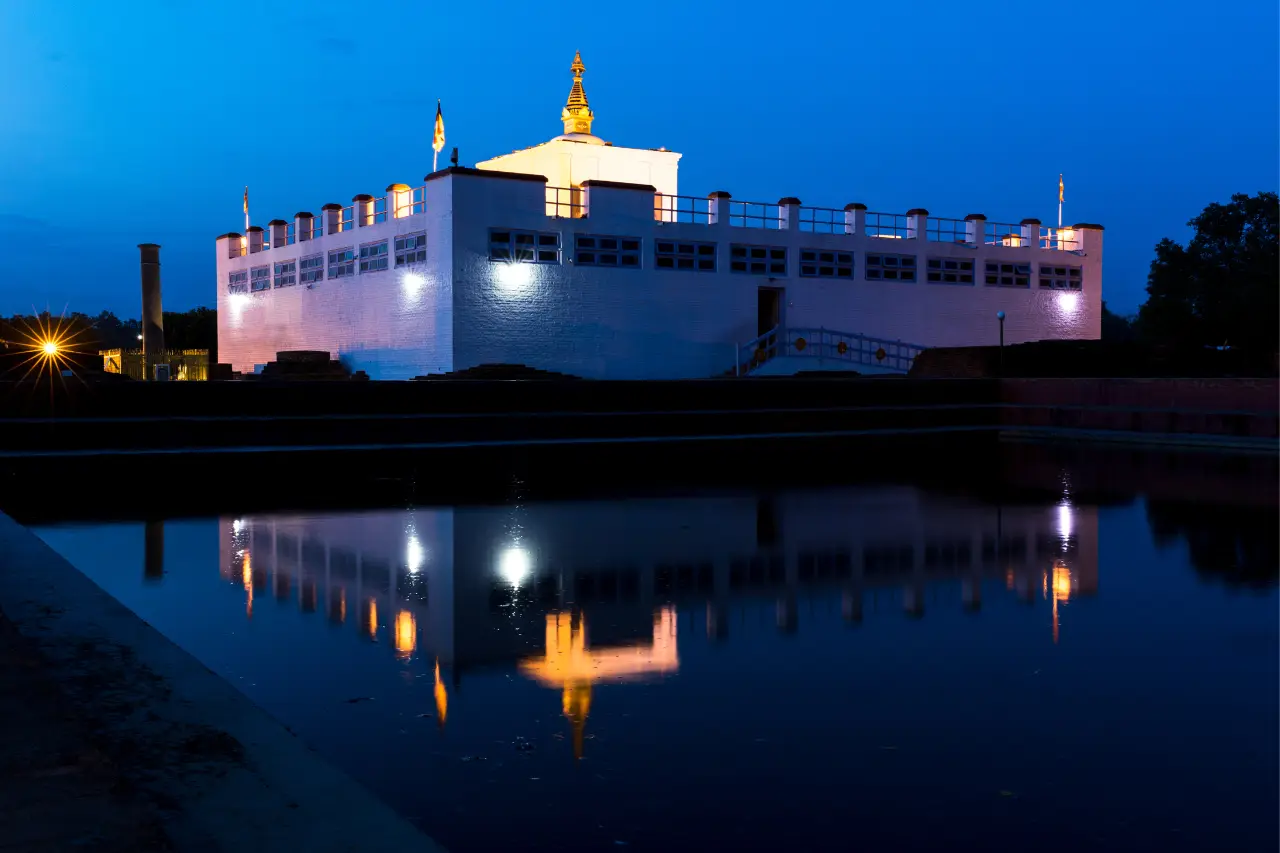
No other spot on the Buddhist Circuit carries the same weight of significance. Lumbini is where he was born. Sarnath is where he first taught. Kushinagar is where he departed from this world. But Bodh Gaya—and the Sacred Bodhi Tree—is where the entire story turned. Where a human being became the teacher of gods and men.
These are 7 incredible facts about the Sacred Bodhi Tree that every pilgrim walking the Buddhist circuit should carry in their heart before they arrive.
Fact 1: The Tree Before You Is a Living Lineage — Not a Relic
One of the first things many pilgrims wonder when they arrive at Bodh Gaya is, “Is this the actual tree?”
The honest answer is: not exactly—and yet, completely yes. The original Bodhi Tree was a specific tree, growing in a specific place, on a specific night. It did not survive the centuries intact. History records that it was damaged during the reign of Emperor Ashoka — ironically, the very emperor who became Buddhism’s greatest royal champion. His queen, jealous of his devotion, reportedly poisoned the tree. Later attacks, floods, and the long passage of time took further tolls.
But before all of this happened, a cutting was taken.
Sanghamitta Theri — the daughter of Emperor Ashoka and a Buddhist nun — carried a branch from the Bodhi Tree to Sri Lanka in the 3rd century BCE. It was planted at Anuradhapura, where it still stands today as the Sri Maha Bodhi—believed to be the oldest living tree in recorded human history, with an unbroken historical record stretching back over 2,300 years.
From that Sri Lankan tree, a cutting was returned to Bodh Gaya. So what you see today is a direct descendant genetically continuous with the original tree. Same species, same lineage, same soil.
The Dhamma itself is passed this way—teacher to student, generation to generation, flame to flame. The tree is no different.
Fact 2: The Bodhi Tree’s Leaves Are a Teaching in Themselves
The Ficus religiosa—the species of tree the Buddha chose for his final meditation—has a distinctive leaf. Heart-shaped, with a long, delicate tip that tapers to a fine point. In Sanskrit it is called “Pippala.” In Pali, Assattha.
In the stillness of early morning, the leaves of the Bodhi Tree tremble softly, even when there is no wind. It is a phenomenon that early pilgrims interpreted as a sign of the tree’s sensitivity—as if it remained, in some ancient way, aware.
Buddhist teachers sometimes use this trembling as an image of impermanence—anicca. Everything moves. Everything passes. Even the most sacred and ancient things are in constant, gentle motion. To sit beneath the Bodhi Tree and watch its leaves is itself a meditation.
Pilgrims often carry fallen leaves home as sacred mementos. In temples across Thailand, Myanmar, and Sri Lanka, you will find Bodhi leaves pressed between pages of Dhamma books or framed and placed on home altars.
🌿 When to Visit: Come to the Bodhi Tree in the early morning, before the day grows warm and the crowds grow thick. The light through the leaves at dawn has a quality that is very difficult to describe—and impossible to forget.
Fact 3: The Diamond Throne Beneath the Tree — The Spot Itself
Directly under the tree, there is a stone seat. It is called the Vajrasana—the Diamond Throne, or the Seat of Enlightenment.
This is the spot. Not approximately, not symbolically—but, according to 2,500 years of Buddhist tradition, literally the place where Siddhartha Gautama sat on the night of the full moon of Vesak, placed his right hand upon the Earth, and asked the Earth itself to witness his enlightenment.
The Earth answered. And the world changed.
Emperor Ashoka visited this spot around 260 BCE — within two centuries of the Buddha’s enlightenment — and enshrined it with a stone marker. The Vajrasana has been venerated continuously ever since. Today it is draped in gold cloth and surrounded by offerings of jasmine, marigold, and burning incense.
For pilgrims walking the full Buddhist circuit—from Lumbini in Nepal to Kushinagar in Uttar Pradesh—the Vajrasana is perhaps the single most emotionally charged moment of the entire journey. Some pilgrims spend hours here in silence. Some weep. Some simply sit and breathe.
There is nothing to do here except be present. The place itself does the rest.
Fact 4: Bodh Gaya Is the Spiritual Heart of the Entire Buddhist World
Every year, Bodh Gaya receives pilgrims from more than 100 countries. Monks in saffron, nuns in white, lay devotees in the dress of a dozen nations — all converging on this small town in Bihar.
Around the Mahabodhi Temple complex, you will find monasteries, temples, and retreat centers built by Buddhist communities from Thailand, Japan, Bhutan, China, Vietnam, Tibet, Sri Lanka, Korea, and beyond. Each one a living monument to the gratitude that Buddhist communities around the world feel for this place.
For Thai Buddhist pilgrims in particular, Bodh Gaya holds a place of the deepest reverence. The Thai Monastery (Wat Thai) near the Mahabodhi Temple is a beloved resting point—peaceful, beautifully maintained, and a reminder that the global Buddhist family is present here in full.
Walking through Bodh Gaya during peak pilgrimage season (November to February) is one of the most quietly moving experiences available to any spiritual traveler. You do not need to understand every language being spoken around you. The shared intention — devotion, gratitude, the wish to be present in this sacred place — transcends language entirely.
🗓️ Best Time to Visit: October to March for comfortable weather. Buddha Purnima (April/May full moon) for the largest international gathering at the Mahabodhi Temple.
Fact 5: There Are Seven Sacred Stations Around the Bodhi Tree
The Buddha did not leave Bodh Gaya immediately after his enlightenment. According to the Pali canon, he spent seven weeks in the vicinity of the Bodhi Tree—meditating, reflecting, and slowly preparing to share what he had discovered with a suffering world.
Each of those seven weeks is associated with a specific location within or near the Mahabodhi Temple complex. These are sometimes called the Seven Sacred Spots or the Seven Holy Places of Bodh Gaya.
Among the most poignant:
- Animesh Lochana Chaitya: For the first week after his enlightenment, the Buddha stood and gazed at the Bodhi Tree without blinking—a gesture of profound gratitude for the shelter and witness it had offered him.
- Chankramana: During the third week, the Buddha walked in meditation along this path. Stone carvings of lotus flowers mark the places where his feet are said to have touched the ground.
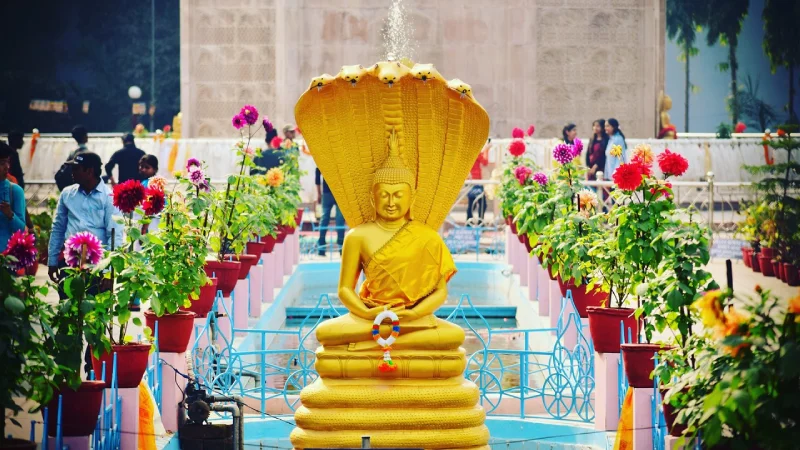
- Muchalinda Lake: In the sixth week, a great storm arose. According to tradition, the serpent king Muchalinda rose from the lake and coiled around the Buddha seven times, spreading his hood to protect him from the rain. It is an image of nature itself bowing in reverence.
Most tourists visit Bodh Gaya in a single rushed afternoon. Pilgrims walking the Buddhist Circuit, with experienced guides, are given the time and context to visit each of these seven stations and to understand what they are standing in the presence of.
Fact 6: The Mahabodhi Temple Is a UNESCO World Heritage Site — and One of the Oldest Brick Structures in India
The Mahabodhi Temple, which towers beside the Sacred Bodhi Tree, was designated a UNESCO World Heritage Site in 2002.
Its history is one of the longest unbroken chains of human devotion in recorded history. Emperor Ashoka built the first shrine here in the 3rd century BCE—making the Mahabodhi Temple complex one of the earliest places of Buddhist worship anywhere in the world. The current pyramidal tower, rising to 55 meters, largely dates from the 5th–6th century CE and is considered a masterpiece of Indian Buddhist architecture.
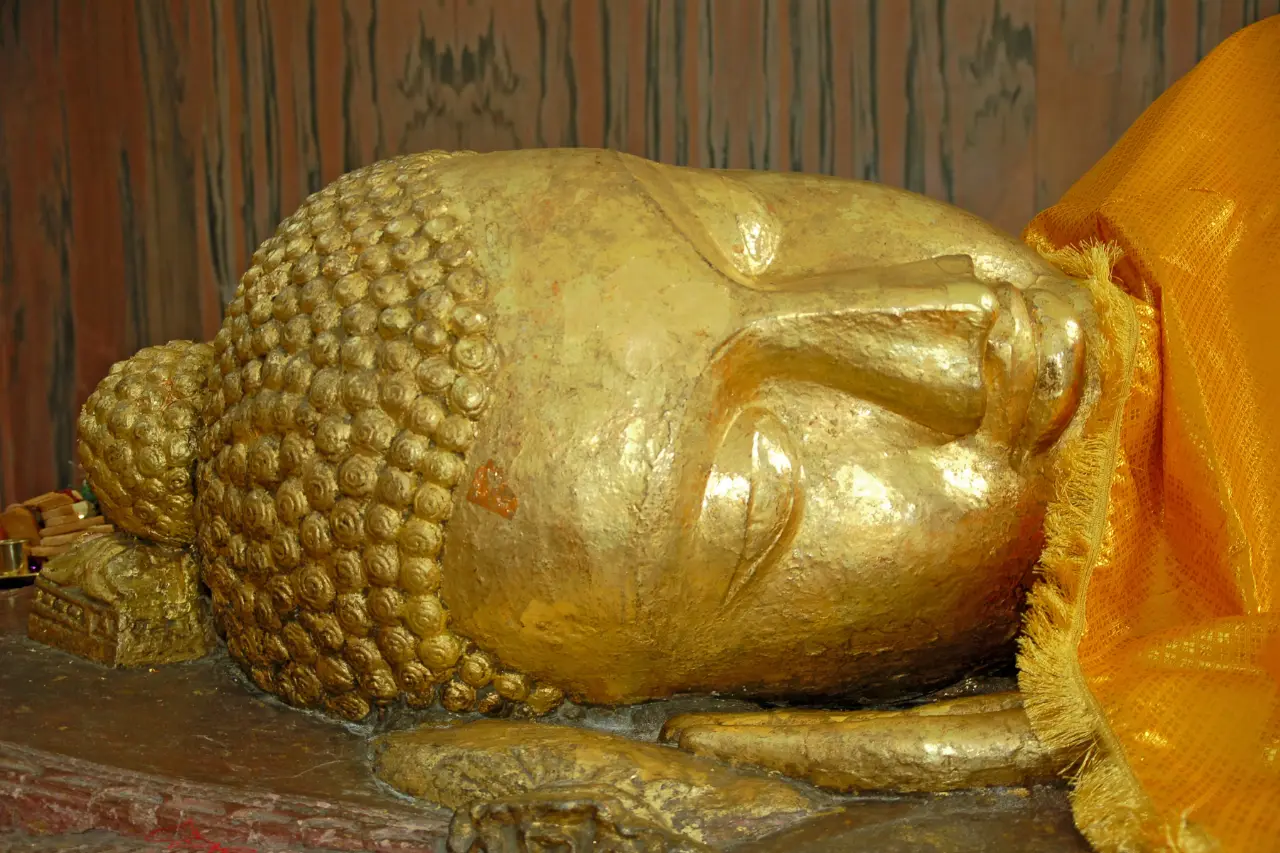
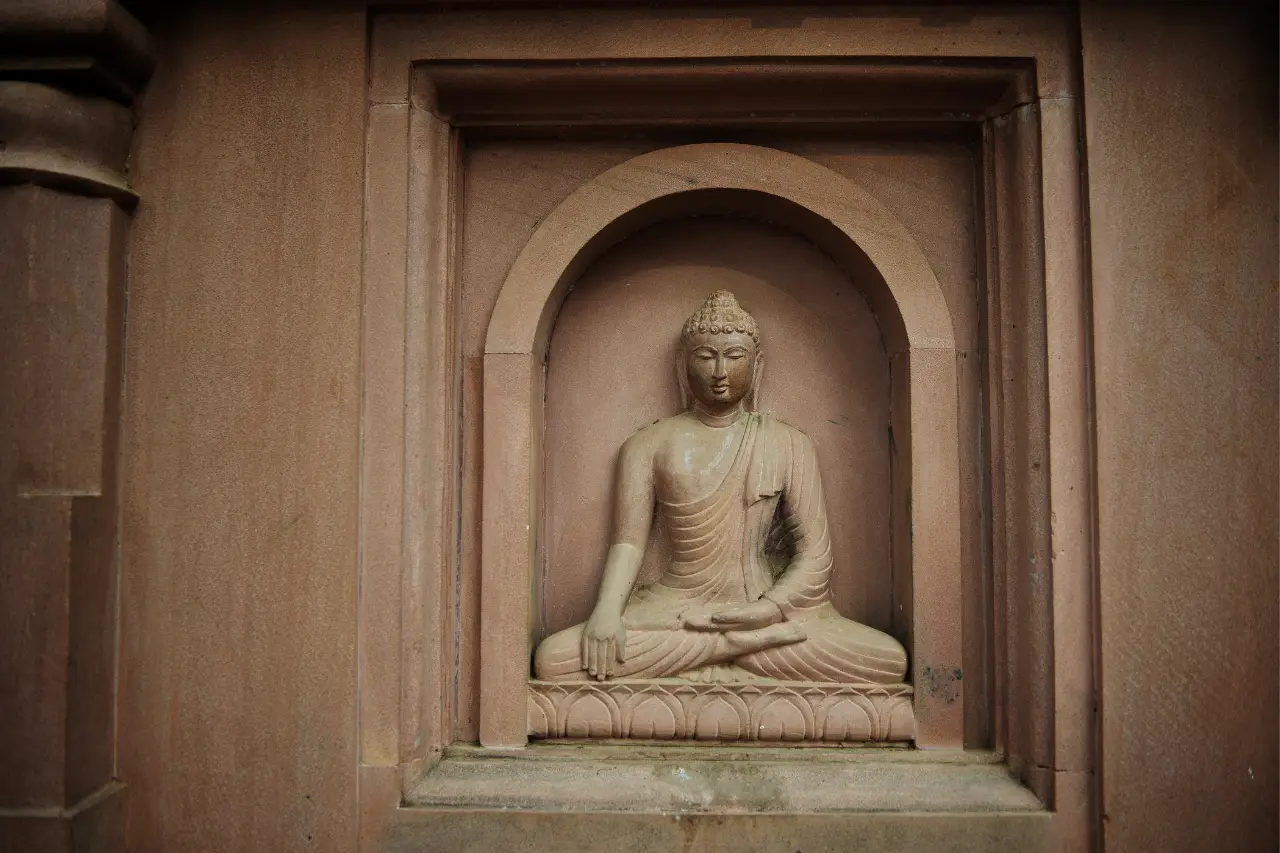
Inside the inner sanctum, a gilded image of the Buddha sits in the bhumisparsha mudra—the gesture of touching the Earth, calling it to witness the moment of his awakening. Gold. Still. The eyes are looking down with an expression that is difficult to name: somewhere between compassion, serenity, and something that has no word in any language.
To stand before this image, with the Sacred Bodhi Tree just outside the window—it is a moment that remains with pilgrims for the rest of their lives.
Fact 7: The Bodhi Tree Asks Nothing — It Simply Offers Everything
Of all the places on the Buddhist Circuit, the Sacred Bodhi Tree in Bodh Gaya is perhaps the most democratic.
It does not require a ticket. It does not require credentials. It does not require years of spiritual practice or a teacher’s recommendation. It stands open to every person who comes—monk or layperson, beginner or advanced practitioner, believer or curious traveler.
You do not have to know what to do when you arrive beneath the Bodhi Tree. You do not have to have the right words, or the right intention, or the right posture.
You simply have to come.
Sit on the grass or the stone benches. Feel the shade. Watch the leaves tremble. Let the sounds of the temple—bells, chanting, birdsong, and the low murmur of prayers in a dozen languages—wash over you.
Something happens in that space. Pilgrims who have walked the entire Buddhist circuit—from Lumbini to Kushinagar, from Sarnath to Rajgir—often say that the Bodhi Tree is where it finally lands. Where the meaning of the whole journey settles in the chest like a stone finding the bottom of still water.
That is the gift of the Sacred Bodhi Tree. It has been giving it for 2,500 years.
Frequently Asked Questions
Q: Is Bodh Gaya the first stop on the Buddhist Circuit tour? A: It depends on your route. Many pilgrims begin at Lumbini (the Buddha’s birthplace in Nepal) and follow the circuit in chronological order: Lumbini → Bodh Gaya → Sarnath → Kushinagar. Others begin at Bodh Gaya, which is well-connected by air and road. Your guide will help you plan the sequence that works best for your time and intentions.
Q: How long should I spend at the Mahabodhi Temple and Bodhi Tree? A: Allow a minimum of half a day — though many pilgrims find they wish to stay much longer. If you are able, plan for a full day: morning meditation beneath the Bodhi Tree, midday exploration of the seven sacred spots, and an evening candlelit ceremony at the temple. Two full days in Bodh Gaya is ideal.
Q: What should I wear when visiting the Sacred Bodhi Tree? A: Dress modestly — covered shoulders and knees are respectful at all Buddhist sacred sites. Light cotton clothing in white or muted colors is common among pilgrims. Remove your footwear before entering the inner sanctum of the Mahabodhi Temple.
Q: Are meditation sessions available near the Bodhi Tree? A: Yes. Meditation is actively welcomed throughout the Mahabodhi Temple complex. The grounds around the Bodhi Tree and the Vajrasana are available for quiet sitting and chanting. Several nearby meditation centers also offer structured programs for visiting pilgrims.
Q: Can I combine Bodh Gaya with other Buddhist Circuit sites in a single trip? A: Absolutely — and this is the most meaningful way to experience the circuit. A well-planned Buddhist circuit tour typically covers Bodh Gaya, Sarnath, Kushinagar, Lumbini, Varanasi, Rajgir, and Nalanda over 10–14 days. An experienced tour operator with deep knowledge of the circuit makes all the difference in the quality of your pilgrimage experience.
Walk the Circuit. Find the Tree.
The Buddhist circuit is a journey through the life of a human being who became fully, magnificently awake.
Bodh Gaya—and the Sacred Bodhi Tree—is its heart.
If you feel called to walk this path, we are here to walk it with you. Our team brings over 25 years of experience guiding Buddhist pilgrims across India and Nepal—with Thai-speaking guides, spiritually informed itineraries, and a deep respect for the sacred nature of every site you will visit.
We are honored to serve as your companions on this journey.
Begin planning your Buddhist Circuit pilgrimage—and let the Bodhi Tree be waiting for you at the center.