7 Reasons to Visit Ladakh, Sikkim or Kashmir after Your Buddhist Pilgrimage in India
Your Buddhist pilgrimage is set. Bodh Gaya, Sarnath, Kushinagar, the holy circuit is planned. But you’ve got a few days to go. Maybe a week.
Every experienced Buddhist traveler eventually asks himself the question: Should I go north?
Having spoken with hundreds of pilgrims who have made this journey, the answer is almost always the same—yes, and they wish they had done it sooner.
Here are 7 reasons why you should add Ladakh, Sikkim or Kashmir to your India Buddhist pilgrimage.
1. These monasteries are very much alive
The Buddhist sites on the classical circuit – Bodh Gaya, Sarnath, Nalanda – are ancient, to be sure. But many of the monastery buildings are reconstructed, rebuilt centuries after the originals were destroyed.
In Ladakh and Sikkim the monasteries continued to function. In Hemis Monastery, monks have been chanting since the 15th century. The same butter lamps at Tashiding in Sikkim have been lit every morning for hundreds of years. These are living monasteries—not heritage sites. That difference is felt the moment you step inside.
2. The Landscape Itself Is a Spiritual Experience
In Bodh Gaya and Sarnath, you are on the flat, dusty Gangetic plain. The sacred power is immense, but the landscape is ordinary.
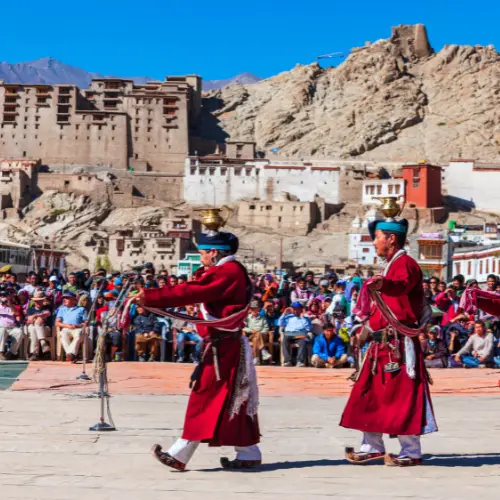
In Ladakh, you are on the roof of the world. The sky is bluer than you have ever seen. Mountains rise to 6,000 meters on every side. The silence at dawn — before the monks begin their chants — is unlike anything else in India.
In Sikkim, lush green hills rise and fall in every direction, and monasteries appear at the top of ridges like something out of a dream. The landscape mirrors the inner stillness that pilgrimage is meant to create.
3. You Will Meet Tibetan Buddhist Communities
One of the most moving aspects of visiting Ladakh or Sikkim is meeting the local Buddhist communities—people who live their faith every day.
Ladakhis are Tibetan Buddhists. They greet pilgrims with warmth and openness. In many monastery towns, you can attend morning prayer sessions, speak with monks, and witness rituals that have not changed in centuries.
For Thai Buddhist pilgrims especially, the connection is immediate—the images of the Buddha, the prayer flags, and the incense are all recognizable and deeply familiar.
4. The Buddhist History Is Older Than You Think
Most travelers do not know that Kashmir hosted the Fourth Buddhist Council around the 1st century CE—one of the most important gatherings in the history of the Dharma. The site, at Harwan near Srinagar, can still be visited.
Ladakh was a key stop on the ancient Silk Road—Buddhist texts and teachers traveled through here between India, Tibet, and Central Asia. The Alchi Monastery holds 11th-century murals that are among the finest surviving examples of Indo-Tibetan Buddhist art anywhere in Asia.
Adding even 3 days to visit these places deepens your understanding of how the Dharma traveled the world.
5. It Is Surprisingly Easy to Combine With the Classical Circuit
Many pilgrims assume that combining the classical circuit with a Himalayan extension means a complicated, exhausting trip. In practice, it is quite manageable.
Example combined itinerary (16–18 days total):
- Days 1–12: Classical Buddhist circuit — Delhi → Varanasi → Sarnath → Bodh Gaya → Rajgir → Nalanda → Kushinagar → Lumbini
- Days 13–18: Fly from Varanasi/Delhi to Leh (Ladakh) or Bagdogra (Sikkim) for the Himalayan extension
The key is working with an experienced tour operator—like Prime Value Tours—who can design the combined itinerary, handle all internal flights, permits, monastery access, and accommodation in one package.
6. It Adds Extraordinary Value to an Already Sacred Trip
If you are flying from Thailand, Australia, Taiwan, or Europe to India for a Buddhist pilgrimage, you are already investing significantly. Adding 5–7 days for a Himalayan extension adds extraordinary depth and value to the same trip.
Many pilgrims say the classical circuit gave them the story of the Buddha. Ladakh or Sikkim gave them the living tradition. Together, they make a complete pilgrimage.
7. Permits and Logistics Are Handled by Your Tour Operator
The one practical concern people raise about Ladakh and Sikkim is permits—some areas require Inner Line Permits (ILP) or Protected Area Permits (PAP). This sounds complicated, but it is entirely routine.
A government-approved, experienced tour operator handles all permits as part of your package. You do not need to worry about bureaucracy. You arrive, and the journey unfolds.
Prime Value Tours, recognized by the Ministry of Tourism, Government of India, and a member of IATO, has been arranging exactly these combined pilgrimages for over 25 years.
📷 Suggested Image: Prayer flags above Hemis Monastery, Ladakh Caption: “Prayer flags flutter above Hemis Monastery in Ladakh—a sacred site where the Buddha’s teachings have been practiced unbroken for centuries.” Alt Text: Hemis Monastery, Ladakh, prayer flags Buddhist pilgrimage India
Frequently Asked Questions
Q: What is the best Himalayan destination for a first-time extension — Ladakh, Kashmir, or Sikkim? A: For first-timers, Sikkim is often recommended—it’s lower altitude, lush, and very accessible. For those seeking the most dramatic Tibetan Buddhist experience, Ladakh is unmatched. Kashmir suits pilgrims interested in the ancient history of Buddhism and a more contemplative, heritage-focused experience.
Q: How many extra days do I need for a Himalayan extension? A: A minimum of 4–5 days for Sikkim, 5–7 days for Ladakh (including 2 days for acclimatization), and 2–3 days for Kashmir’s main Buddhist sites. We always recommend not rushing — the slower you go, the deeper the experience.
Q: Is altitude sickness a concern for older pilgrims in Ladakh? A: It can be. Ladakh sits at 3,500 meters. We strongly recommend flying directly to Leh rather than driving, resting for 2 days before any monastery visits, staying hydrated, and avoiding alcohol. Most healthy pilgrims manage well with proper preparation.
Q: Can I get vegetarian food throughout the Himalayan extension? A: Yes. Vegetarian food is available throughout Ladakh and Sikkim — especially in monastery towns. Many guesthouses and hotels cater to Buddhist dietary needs. Let your tour operator know your requirements when booking.
Q: How do I start planning a combined pilgrimage with a Himalayan extension? A: Visit Prime Value Tours — Plan Your trip and share your travel dates, group size, and the destinations you are interested in. Their team will create a custom itinerary for you with no obligation.
Ready to Go North?
The Dharma did not stop at Bodh Gaya. It climbed the mountains, crossed the passes, and found new homes in Ladakh’s valleys, Sikkim’s green hills, and Kashmir’s ancient stones.
If you are ready to follow it there, we are ready to take you.
Prime Value Tours has been walking with Buddhist pilgrims for over 25 years. Your complete pilgrimage — classical circuit and Himalayan extension — is just one conversation away.