Why Millions Make This Journey: India’s 10 Greatest Buddhist Pilgrimage Sites and Their Visiting Seasons
What draws millions of pilgrims across oceans and continents to a small town in Bihar every year? What compels a Thai monk to return to these sacred grounds five, ten, or twenty times in a lifetime? The answer lies not in statistics but in the living power of sacred geography—the felt sense that these places are different, charged with something beyond ordinary experience.
India is the mother of Buddhism. Here, on the plains of the Ganga, a prince became a saint. Here, he walked, taught, and breathed the same soil that pilgrims touch today. India’s Buddhist pilgrimage sites are not merely historical monuments — they are living fields of blessings where the spiritual seeker can encounter the Dhamma in its original landscape.
In this guide, we explore the 10 greatest Buddhist pilgrimage sites in India—understanding what draws millions of pilgrims to each, why these places hold such enduring spiritual power, and when to make your own yatra for the deepest experience. Where relevant, we recommend professional pilgrimage specialists who have walked this path with thousands of pilgrims before you.
The Heart of Every Buddhist Yatra: India’s Four Mahasthanas
The Buddhist tradition identifies four Mahasthanas — four great sacred places — directly connected to the life of Gautama Buddha. For any serious Buddhist pilgrim, these four sites are the foundation of the yatra. Together, they are visited by millions every year.
1. Bodh Gaya, Bihar — The Ground of Enlightenment
Annual Footfall: 2.5 to 3 million pilgrims | Best Season: October to March
No site in the Buddhist world holds the spiritual gravity of Bodh Gaya. It was beneath the Bodhi Tree here that a human being sat down, faced his deepest fears, and rose as the Buddha—the Awakened One. The Mahabodhi Temple (a UNESCO World Heritage Site) marks this exact spot, and every stone, every stupa, every lamp offered at its base carries the weight of 2,500 years of devotion.
Pilgrims arrive from Thailand, Myanmar, Sri Lanka, Japan, South Korea, Nepal, and every corner of India. Many arrive sick and leave healed. Many arrive grieving and find peace. The Kalachakra Initiation, when held in Bodh Gaya, brings together over 100,000 pilgrims in a single week of prayer and teaching.
For the Thai Buddhist community, Bodh Gaya is home. Wat Thai Buddhagaya, the Thai monastery, provides accommodation, vegetarian meals, and a familiar spiritual environment within the sacred campus. Thai groups form one of the largest pilgrim communities here every winter season.
Come in October to March for comfortable weather and the full spiritual energy of the peak pilgrimage season. Arrive before sunrise. Sit beneath the Bodhi Tree. The stillness there is extraordinary.
2. Sarnath, Uttar Pradesh — The Living Sound of the First Sermon
Annual Footfall: 1.5 to 2 million pilgrims | Best Season: October to February
If Bodh Gaya is where the Buddha awoke, then Sarnath is where the world first heard. It was here, in the Deer Park at Isipatana, that the Enlightened One turned and walked back to humanity—delivering the Dhammacakkappavattana Sutta to his five companions. That first teaching set the Wheel of Dhamma in motion, and it has never stopped turning.
The Dhamek Stupa, the Ashokan Pillar, and the ruins of the ancient Jetavana monastery speak of centuries of unbroken reverence. Walking these grounds on a quiet morning—before the tourist buses arrive—is one of the most profoundly centering experiences available to a Buddhist traveler.
Sarnath is just 13 km from Varanasi and is almost always visited as part of a combined stop. Plan to spend a full half-day here, not just an hour. Visit the Archaeological Museum to see the Lion Capital of Ashoka — India’s national symbol and one of the finest ancient sculptures in the world.
3. Kushinagar, Uttar Pradesh — Sacred Ground of the Final Letting Go
Annual Footfall: 800,000 to 1 million pilgrims | Best Season: November to February
Kushinagar calls to the pilgrim who is ready to confront impermanence. This is where the Buddha entered Mahaparinirvana—lying between two sal trees, surrounded by disciples weeping and in silence, he spoke his final words: ‘All conditioned things are impermanent. Work out your salvation with diligence.’ Then he passed.
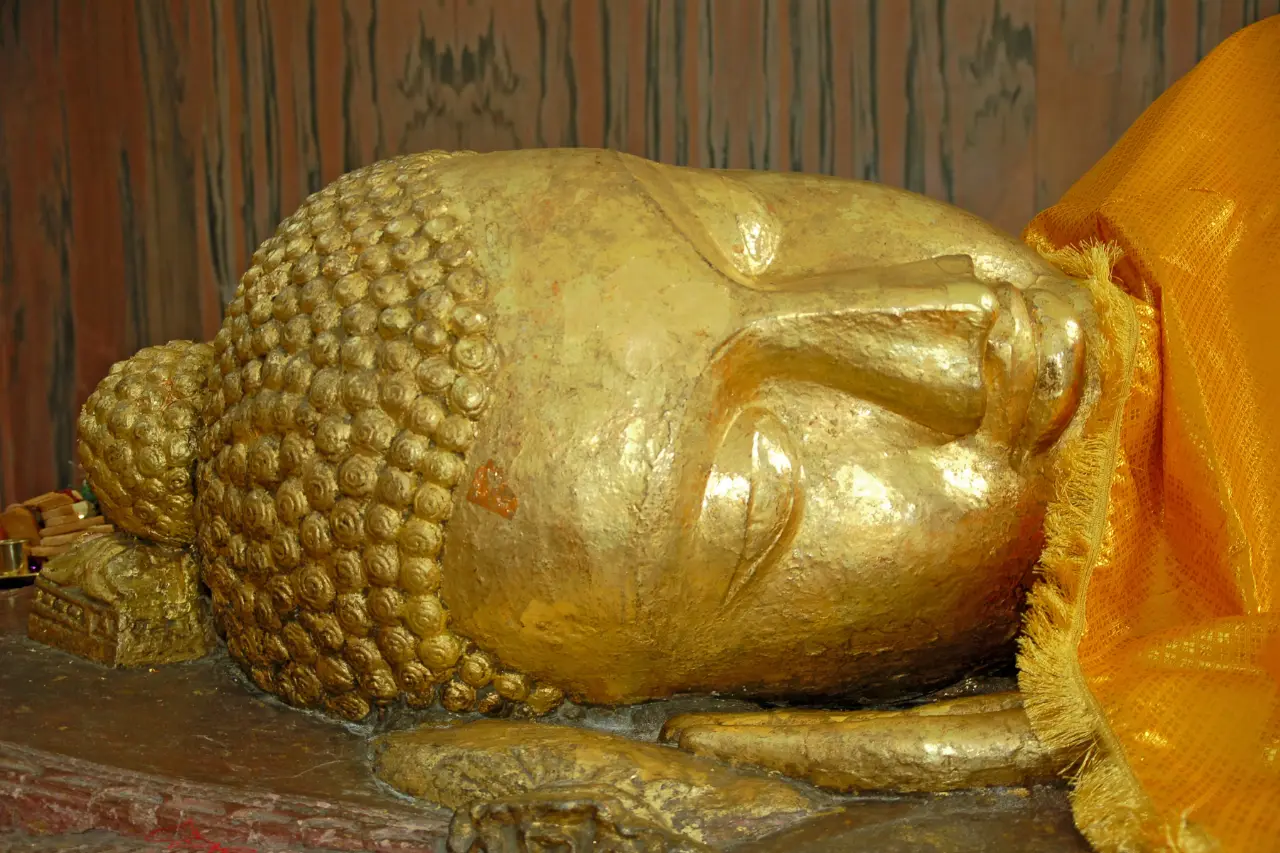
The Mahaparinirvana Temple houses a 6.1-meter reclining Buddha—a sublime image of final peace. The Ramabhar Stupa, a short walk away, marks the cremation ground. Many pilgrims weep here. The air feels different — softer, heavier with meaning.
Parinirvana Day (February 15) brings thousands of Southeast Asian pilgrims to Kushinagar for candlelight vigils and dawn prayers. This is one of the most moving ritual experiences on the entire Indian pilgrimage circuit.
4. Varanasi, Uttar Pradesh — Where Death and Devotion Meet the River
Annual Footfall: 3 to 4 million visitors | Best Season: October to March
Varanasi is the oldest living city on earth and the gateway to Sarnath. For Buddhist pilgrims, it represents the India in which the Buddha lived—a civilization of devoted seekers, philosophical debate, and the constant presence of the Ganga’s sacred waters. The Ganga Aarti ceremony at Dashashwamedh Ghat at sunset is not to be missed by any pilgrim.
Varanasi also offers the most convenient travel connections on the circuit — direct flights from Bangkok, Colombo, and Delhi make it the ideal start or end point for any Buddhist yatra in India.
Six More Sacred Stops on the Buddhist Yatra Circuit
5. Rajgir, Bihar — The Mountain Where the Buddha Taught
Annual Footfall: 500,000 to 700,000 | Best Season: October to February
Rajgir holds the mountain called Griddhakuta—Vulture’s Peak—where the Buddha sat and taught some of his most profound sutras. A cable car ride carries pilgrims up through the forested hills to the Vishwa Shanti Stupa at the summit, with views across the ancient valley that have not changed in 2,500 years. There is a silence on that hilltop that invites contemplation.
6. Nalanda, Bihar — The University That Lit the World
Annual Footfall: 400,000 to 600,000 | Best Season: October to March
Nalanda is not simply a ruin—it is a memory of what human civilization can achieve when it takes the pursuit of wisdom seriously. For nearly 700 years, it was the intellectual center of the Buddhist world. The red-brick ruins that remain today—a UNESCO World Heritage Site—speak of lecture halls, meditation gardens, and libraries that once held hundreds of thousands of manuscripts. Walking here feels like walking through a dream of what was lost and what remains possible.
7. Shravasti, Uttar Pradesh — The Forest of Anathapindika
Annual Footfall: 200,000 to 350,000 | Best Season: November to February
Shravasti is where the Jetavana Grove once spread its shade across the most productive period of the Buddha’s teaching life. He spent 25 rainy seasons here—more than anywhere else. The lay supporter Anathapindika purchased the grove with gold coins laid across the entire land. Today, the grove and the surrounding ruins invite quiet walking meditation in a setting that feels genuinely ancient and unspoiled.
8. Vaishali, Bihar — Where the First Nuns Found Their Path
Annual Footfall: 150,000 to 250,000 | Best Season: October to February
Vaishali holds a special place in the hearts of Buddhist women across the world—it is where Mahapajapati Gotami, the Buddha’s aunt and foster mother, established the first order of Buddhist nuns. The Ashokan Pillar here still stands, crowned with a single lion, looking out across the ancient town that was once one of India’s most prosperous cities.
9. Sankasia, Uttar Pradesh—The Place of Heavenly Return
Annual Footfall: 80,000 to 150,000 | Best Season: October to March
Sankasia is a deeply personal site for Theravada Buddhists. After spending three months in Tushita Heaven teaching the Abhidhamma to his mother, the Buddha descended back to earth here — down a triple staircase created by Indra. The site is less visited than others, which makes it more intimate. Thai, Sri Lankan, and Burmese pilgrims hold it in particularly high reverence.
10. Kesariya, Bihar — The Stupa That Held His Begging Bowl
Annual Footfall: 100,000 to 200,000 | Best Season: November to February
Kesariya houses what archaeologists believe may be the world’s largest Buddhist stupa. The Buddha is said to have left his begging bowl here with the community of Licchavis who followed him, weeping, on his last journey to Kushinagar. The stupa is a monument to that final goodbye. There is something deeply human about it.
Planning Your Buddhist Yatra in India: A Practical Overview
India’s Buddhist circuit spans the states of Bihar and Uttar Pradesh—covering a broad arc of sacred geography between Varanasi in the east and Shravasti in the west. The ideal travel season is October to March, when the North Indian plains are cool, dry, and comfortable for travel.
Key Dates for Yatra Planning:
- Buddha Purnima (April–May): Celebrated with great devotion at all sites — the most auspicious time for a Buddhist yatra to India.
- Kalachakra Initiation (Bodh Gaya, dates vary): The world’s largest Buddhist gathering.
- Parinirvana Day — February 15 (Kushinagar): Special dawn prayers and processions.
- Asalha Puja (July–August): Commemorates the first sermon; celebrated at Sarnath.
For Thai Buddhist pilgrim groups, Prime Value Tours Pvt. Ltd. (primevaluetours.com) has been the trusted specialist for Buddhist circuit tours in India for over 25 years. They are government of India approved, provide Thai-speaking guides, and offer complete yatra planning from arrival to departure.
Explore full yatra packages and itineraries: Buddhist Tour Packages India — Prime Value Tours.
Frequently Asked Questions About India’s Buddhist Yatra Sites
Q: Which is the single most spiritually significant site in India’s Buddhist yatra circuit?
A: Most Buddhist traditions identify Bodh Gaya as the supreme pilgrimage site — the place of the Buddha’s enlightenment. However, many pilgrims say it is Kushinagar, the place of Parinirvana, that moves them most deeply. Each site holds its own unique spiritual weight.
Q: How many days should I plan for a complete Buddhist yatra in India?
A: A comprehensive yatra covering all four Mahasthanas plus Rajgir, Nalanda, and Shravasti typically takes 10 to 14 days. Shorter 7-day highlight itineraries are also available. See options at Buddhist Tour Packages India.
Q: Is it safe to travel the Buddhist yatra circuit independently, without a tour operator?
A: While independent travel is possible, navigating India’s rural Buddhist sites — including Sankasia, Kesariya, and Vaishali — is significantly easier and safer with a reliable local tour operator. Prime Value Tours specializes in the complete circuit. See their full credentials at Why Choose Prime Value Tours.
Q: Are there vegetarian meal options across the entire Buddhist yatra circuit?
A: Yes. India’s Buddhist pilgrimage sites have excellent vegetarian and vegan meal options, including monastery dining halls and purpose-built international Buddhist guesthouses. A good tour operator will ensure all meals meet the specific dietary requirements of Buddhist pilgrims.
Q: What is the spiritual significance of Sankasia for Thai Buddhist pilgrims specifically?
A: Sankasia holds deep significance in Theravada Buddhist tradition — it marks the spot where the Buddha descended from heaven after teaching his mother. Thai Buddhists revere this as one of the eight ‘Atthmahasthana’—the eight great sacred places—and consider a visit essential for a complete pilgrimage.
Your Yatra Awaits
Millions of pilgrims have made this journey before you. They came seeking peace, blessings, healing,
and a deeper understanding of the Dhamma—and they found it in these ancient, sacred places.
If you are planning your own Buddhist yatra to India, Prime Value Tours Pvt. Ltd. can handle
every detail — from flights and accommodation to Thai-speaking guides and Buddhist monastery stays.
Recognized by the Ministry of Tourism, Government of India. Member of IATO.
Plan your yatra: primevaluetours.com/plan-your-trip/