Bodhgaya Trails
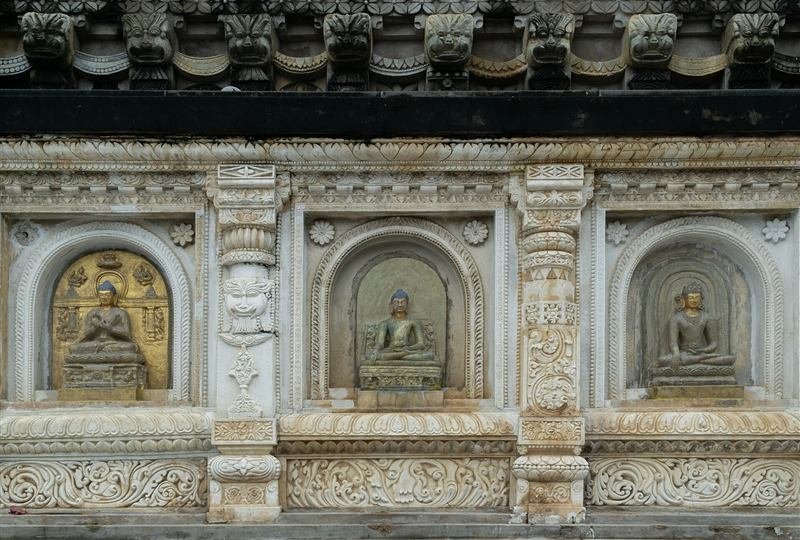
Carved panels on the south wall of the Mahabodhi Temple in Bodh Gaya
Home / Sacred places
Bodh Gaya guide

Sacred places in Bodh Gaya

Ten places worth your time, in the order we walk them: first the heart of the town, then the monasteries, then the villages and caves around it.

The main sacred places in Bodh Gaya are the Mahabodhi Temple, the Bodhi Tree and Vajrasana (Diamond Throne), the seven-week meditation sites around the temple, Mucalinda Lake, the Great Buddha Statue, the international monasteries, Sujata Stupa and the Dungeshwari Caves. The temple complex is compact and walkable. Plan one morning for the complex, and a second half-day for the monasteries and statue.

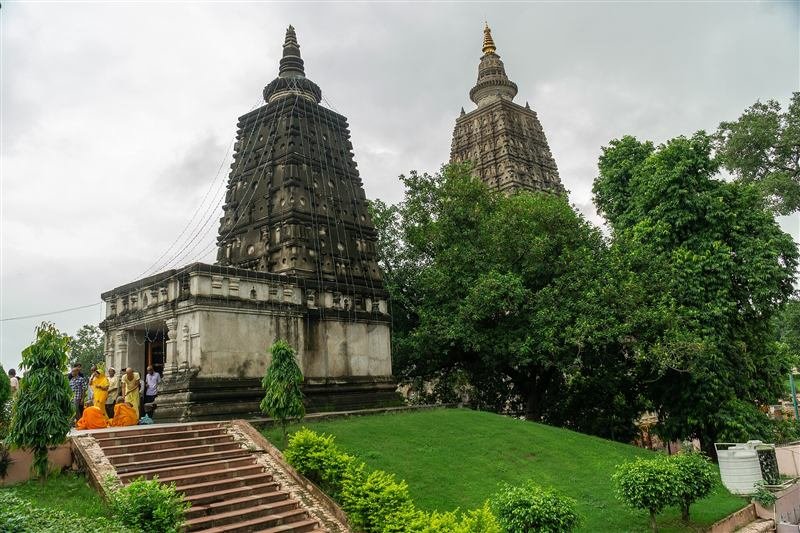
Mahabodhi Temple spire rising behind the Animesh Lochana Chaitya in Bodh Gaya
01 · UNESCO WORLD HERITAGE SITE

Mahabodhi Temple

The Mahabodhi Temple is the great brick temple built at the place where the Buddha attained enlightenment. Tradition credits Emperor Ashoka with the first shrine in the 3rd century BCE. The present tower, about 55 metres tall, dates to the Gupta period (around the 5th to 6th century CE) and is among the oldest brick temples in India still standing. It was restored in the 19th century and inscribed by UNESCO in 2002.

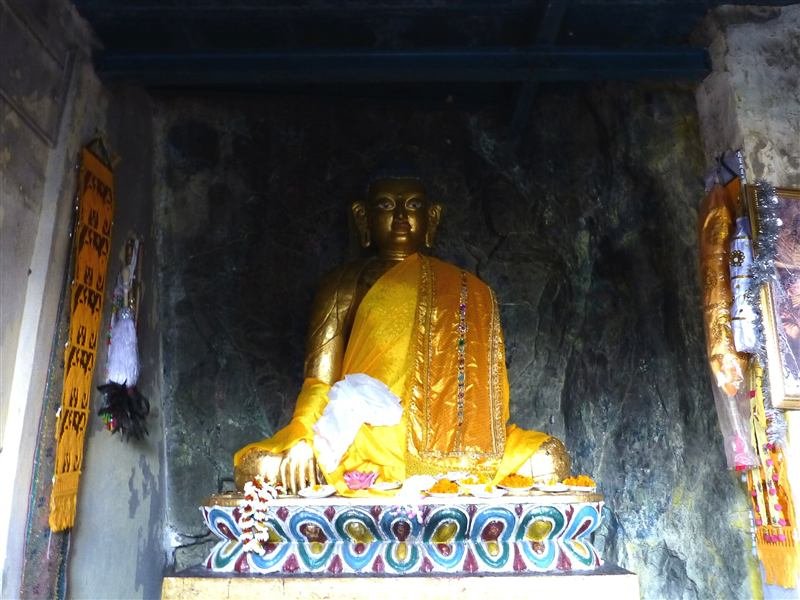
Inside, a gilded Buddha sits in the earth-touching gesture, the posture of the Awakening. Pilgrims circle the temple clockwise, light butter lamps and make prostrations on boards along the terrace.

WhereCentre of Bodh Gaya, beside the Bodhi Tree
Best timeDawn (quiet chanting) and just after sunset (lamps)
Time needed2 to 3 hours for the whole complex
EntryTemple entry is generally free; a small fee applies for cameras and phones in some areas. Hours are roughly early morning to 9 pm. Please confirm on arrival.

Photo: Mahabodhi Temple spire and Animesh Lochana Chaitya, Wikimedia Commons (credits on the contact page).
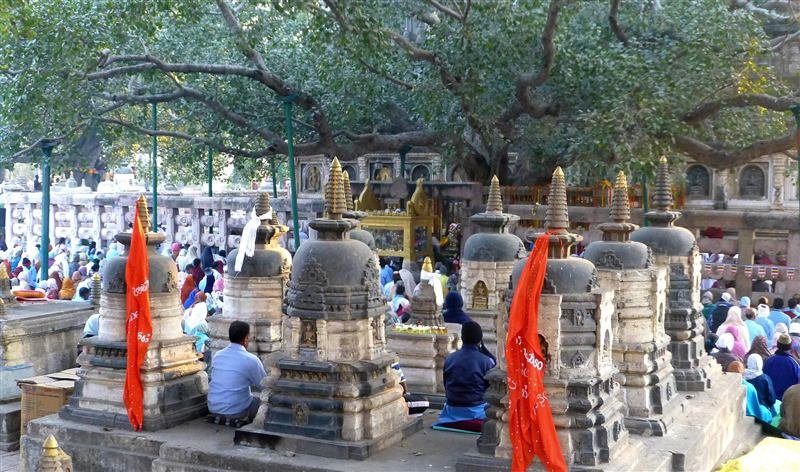
Pilgrims meditating around small stupas beneath the Bodhi Tree
02 · THE AWAKENING

Bodhi Tree & Vajrasana

The Bodhi Tree beside the Mahabodhi Temple descends from the tree under which the Buddha sat, and the red sandstone slab at its foot, the Vajrasana or Diamond Throne, marks the seat of the Awakening. The slab is traditionally linked to Ashoka. The tree is a sacred fig (Ficus religiosa). Cuttings from it have been planted across the Buddhist world, including the Sri Maha Bodhi tree in Anuradhapura, Sri Lanka, grown from a sapling brought in the 3rd century BCE.

  • Sit quietly on the lawn or in the meditation area. Seats are limited at festival time, so arrive early.
  • Leaves fall in winter and are collected by pilgrims. Do not pick leaves from the branches.
  • Enclosures around the tree have stone railings, partly original, with carved lotus and animal figures.
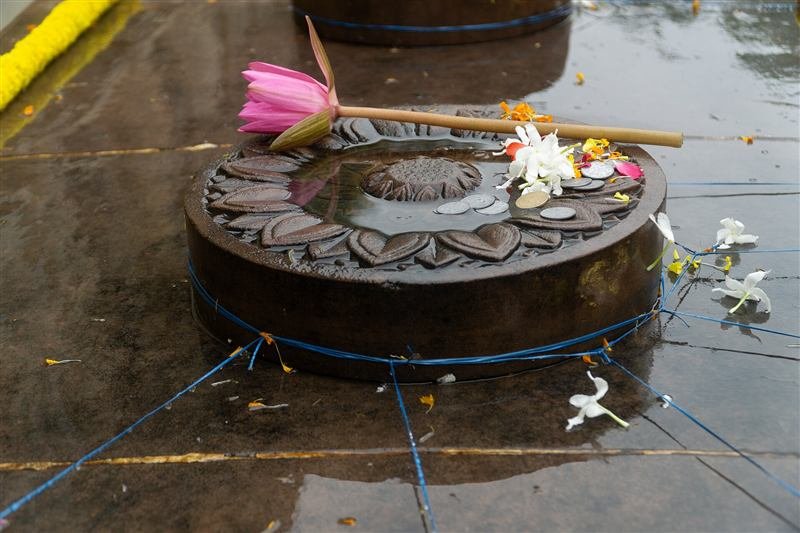
Lotus-carved Jewel Walk platform north of the Mahabodhi Temple
03 · SEVEN WEEKS AFTER THE AWAKENING

The seven-week sites around the temple

According to Buddhist tradition, the Buddha spent seven weeks near the Bodhi Tree after his enlightenment, and each week is remembered by a marked spot in the temple complex. Walking them in order is one of the most rewarding things you can do here.

  • Week 1, Vajrasana. Sitting beneath the Bodhi Tree.
  • Week 2, Animesh Lochana Chaitya. He gazed at the tree without blinking, in gratitude. A small shrine marks the spot north-east of the temple.
  • Week 3, Ratnachankramana (Jewel Walk). A raised platform with carved lotuses, where he walked in meditation.
  • Week 4, Ratnagara Chaitya (Jewel House). The place of deep reflection on the teachings.
  • Week 5, Ajapala Nigrodha tree. A banyan where he taught a Brahmin; marked by a pillar.
  • Week 6, Mucalinda Lake. See the next section.
  • Week 7, Rajayatana tree. Where the merchants Tapussa and Bhallika offered food and became his first lay followers.
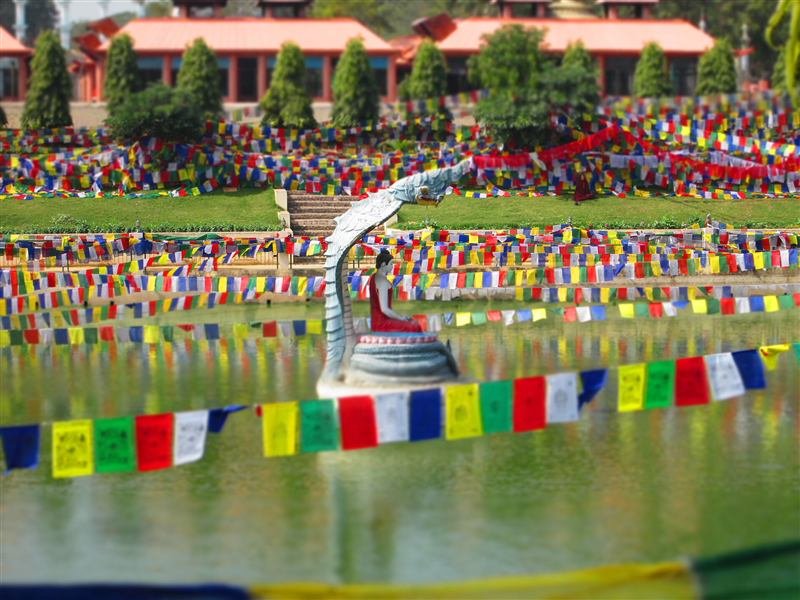
Mucalinda Lake with ghat and prayer flags in Bodh Gaya
04 · WEEK SIX

Mucalinda Lake

Mucalinda Lake, just south of the Mahabodhi Temple, is where the serpent king Mucalinda is said to have sheltered the Buddha from a storm by coiling around him and spreading his hood overhead. A statue in the middle of the water recalls the story. The lake is calm in the evening, when butter lamps and prayer flags are reflected on the surface, and it is a good place to wind down after the temple.

  • Best light: late afternoon.
  • Lake edges can be slippery in the monsoon.
  • Keep a respectful distance from the water if monks are chanting nearby.
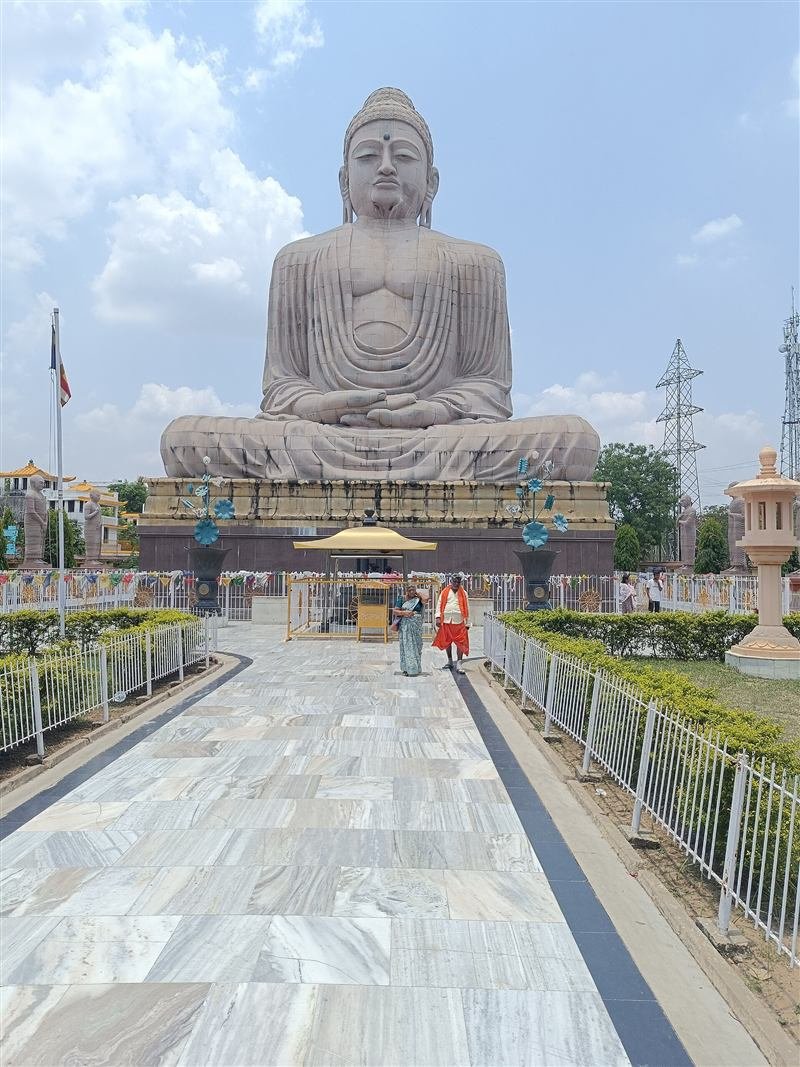
The 80 foot Great Buddha Statue in Bodh Gaya seated on a lotus
05 · LANDMARK

Great Buddha Statue (Daijokyo Buddha)

The Great Buddha Statue is an 80 foot (about 25 m) meditating Buddha in sandstone and granite, consecrated by the 14th Dalai Lama on 18 November 1989. It was commissioned by the Daijokyo Buddhist sect of Japan and sits on a lotus throne with the Buddha’s ten great disciples in niches around it. It stands a short ride from the temple and is calm for an early walk or a late afternoon, when the stone turns warm.

WhereNear the Japanese temple, about 1 km from the Mahabodhi Temple
Time needed30 to 45 minutes
Good withJapanese Temple (Indosan Nipponji) and Bhutanese monastery
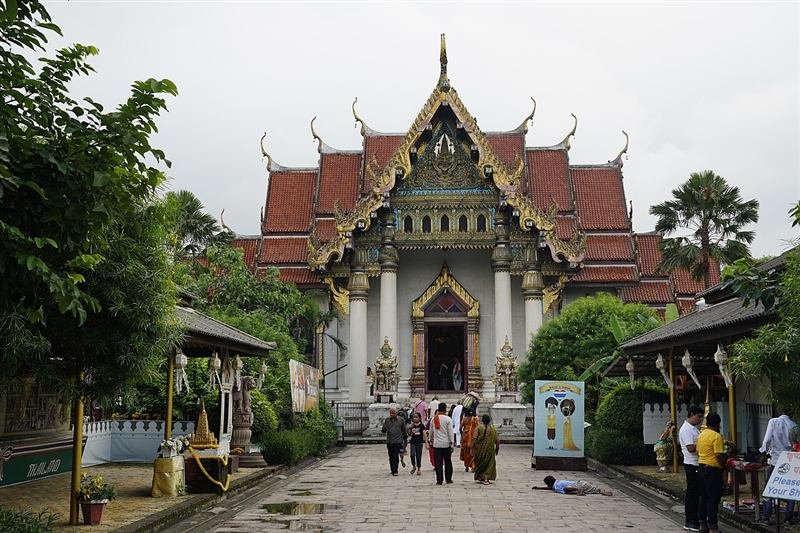
Royal Thai Monastery with orange tiled roof in Bodh Gaya
06 · BUDDHIST ASIA IN ONE TOWN

The international monasteries

Bodh Gaya has dozens of monasteries and temples built by Buddhist countries, each in its own national style, and most welcome quiet visitors. A short list that is easy to do in one half-day:

  • Royal Thai Monastery (Wat Thai Buddhagaya). A Thai-style hall with a gold-trimmed, orange-tiled roof and a large Buddha image inside.
  • Royal Bhutan Monastery. Painted wood in Bhutanese style, with a prayer wheel and murals.
  • Indosan Nipponji (Japanese Temple). A Japanese wooden temple, calm and simple, opened in the early 1970s.
  • Tibetan monasteries such as Tergar and the Karma Temple, busy with chanting in winter.
  • Root Institute for Wisdom Culture. A well-known meditation centre on Root Institute Road, offering courses and retreats in the Tibetan Buddhist tradition. Our office is on the same road.

Dress modestly, remove shoes, and ask before photographing interiors.

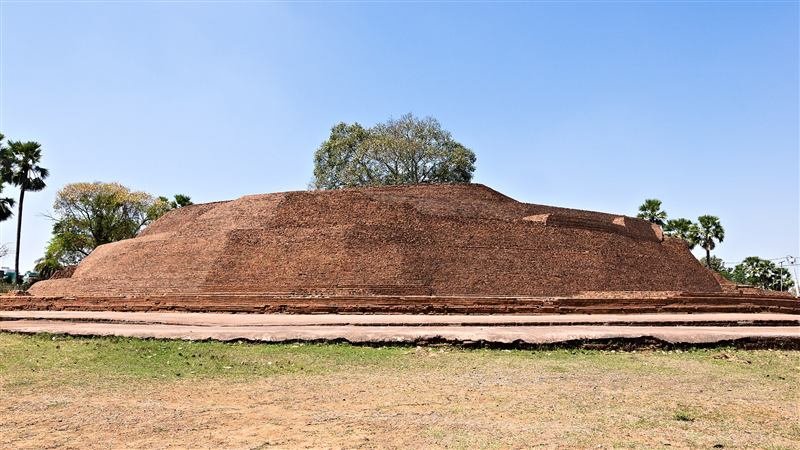
Sujata Stupa brick mound near Bakraur village across the Niranjana river
07 · VILLAGE WALK

Sujata Stupa (Bakraur)

Sujata Stupa is a large ruined brick stupa in the village of Bakraur, across the Niranjana river from Bodh Gaya, that tradition links to Sujata, the village girl who offered milk rice to the Buddha before his enlightenment. The meal ended six years of extreme fasting. The ride across the dry river bed to the stupa is a rewarding rural contrast to the busy temple area, and it helps explain the story of the Middle Way.

  • Best in the morning, with a local guide.
  • The river bed is dry for most of the year, and swells in the monsoon.
  • Carry water and wear walking shoes.
Dungeshwari Cave temple entrance near Bodh Gaya
08 · HALF-DAY TRIP

Dungeshwari (Mahakala) Caves

The Dungeshwari Caves, also called Mahakala or Pragbodhi Caves, are on a rocky hill about 12 km north-east of Bodh Gaya, where the ascetic Gautama is said to have practised severe austerities for six years before choosing the Middle Way. A small cave shrine holds a statue of the emaciated Buddha, and there is a Tibetan temple and a shrine to the Hindu goddess Dungeshwari nearby. The climb is short but steep.

  • Wear comfortable shoes; a few stone steps are uneven.
  • Monkeys are common. Keep food out of sight.
  • Combine with Sujata Stupa on one morning.
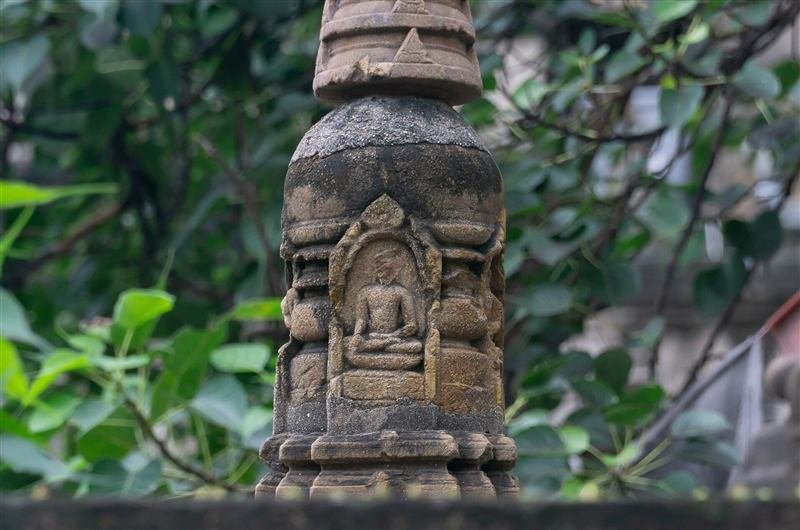
Votive stupas in the Mahabodhi Temple complex in Bodh Gaya
09 · BEYOND BODH GAYA

Rajgir & Nalanda day trips

Rajgir (about 75 to 80 km) and Nalanda (about 90 km) are the two best Buddhist day trips from Bodh Gaya. Rajgir has Gridhakuta (Vulture Peak), where the Buddha taught, and the Venuvana bamboo grove. Nalanda holds the ruins of the ancient monastic university, a UNESCO World Heritage Site since 2016. We build them into our four-day tour, or run them as a long single day.

See the 4-day tour

Want a guide who knows these lanes?

Tell us which places matter most and we will build the day around them, with quiet times and vegetarian meals included.

Send an inquiry