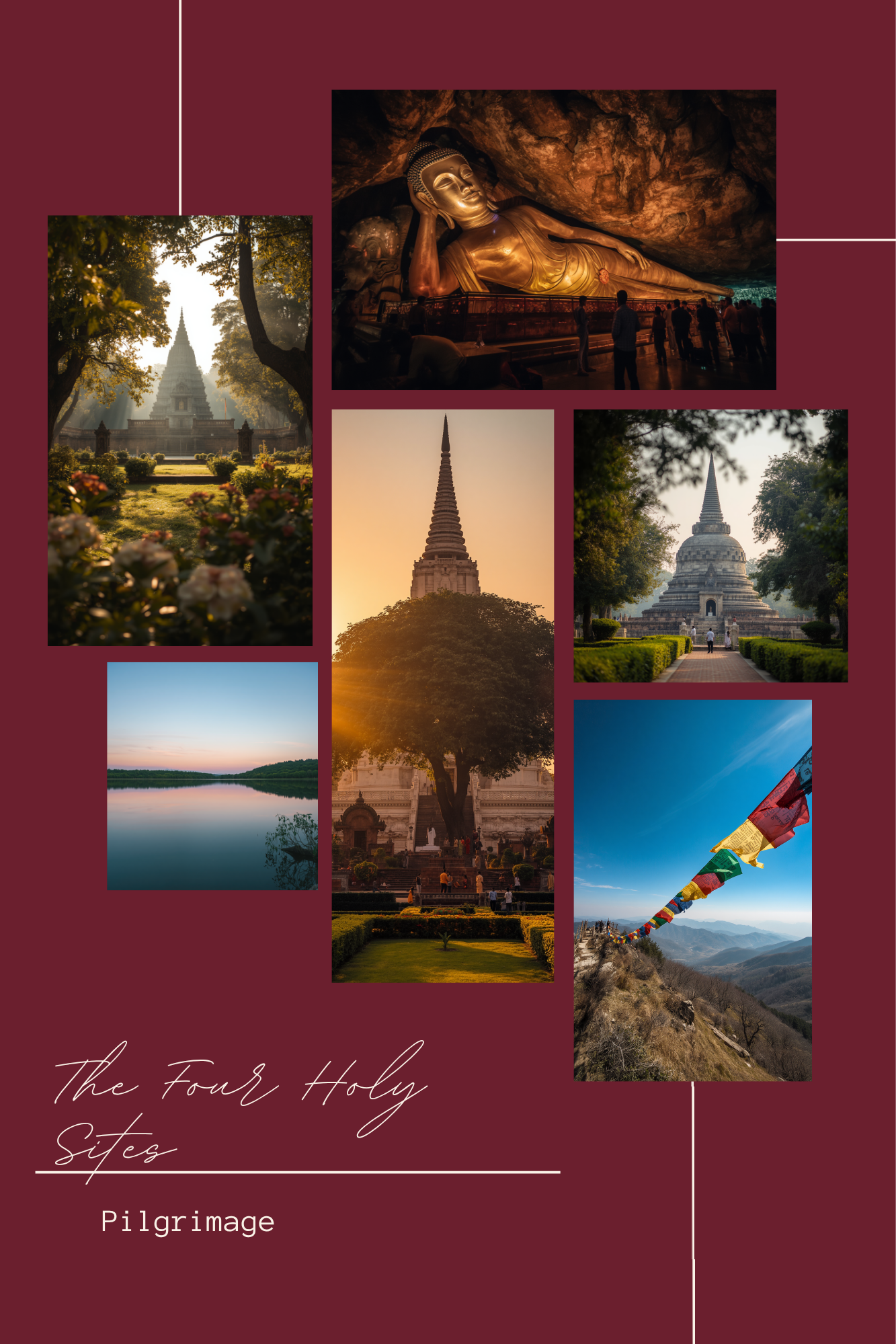
The Merit of Pilgrimage: What the Buddha Promised Those Who Visit the 8 Great Holy Places
There is a particular stillness under the Bodhi Tree at four in the morning, before the tour buses arrive and before the light comes up over the Mahabodhi spire. Elderly women from Ladakh are already circumambulating. A monk from Myanmar has been sitting since three. Nobody speaks. Whatever brought each of them across a continent, it was not sightseeing.
Buddhist pilgrimage merit — what our grandmothers simply called punya — is often described as if it were currency: something earned, banked, spent. The suttas describe something less transactional and far more interesting. They describe a change in the texture of the mind itself, and they attach to that change a promise so specific that it has moved devotees along these roads for twenty-three centuries. This is what the Buddha actually said about the eight great holy places, what he promised, and what a devotee is expected to bring with them beyond a suitcase.
The Four Places the Buddha Named With His Own Voice
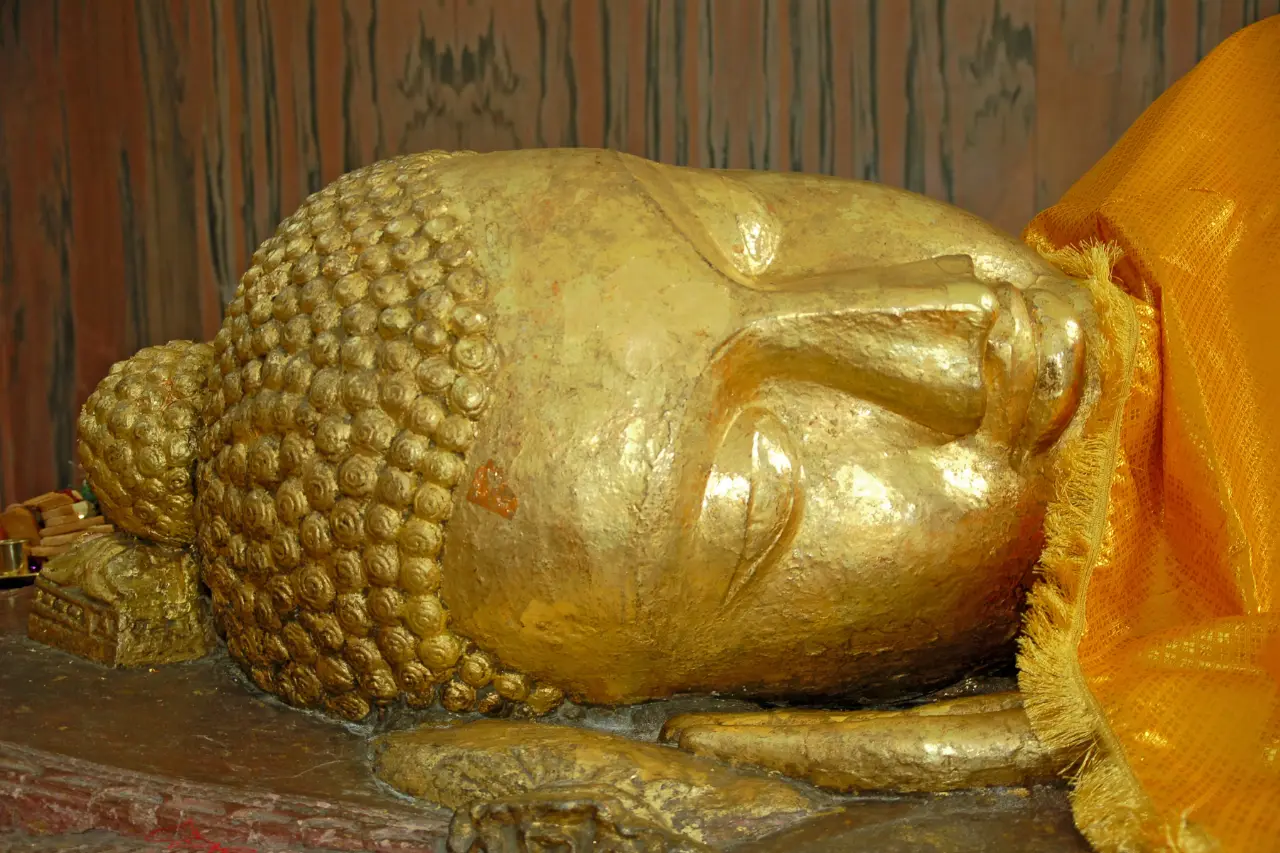
In the Mahaparinibbana Sutta, as the Buddha lay between the twin sal trees at Kusinara, Ananda asked a question that was really about grief: what would the community do once they could no longer see him? Part of the answer was a list of four places.
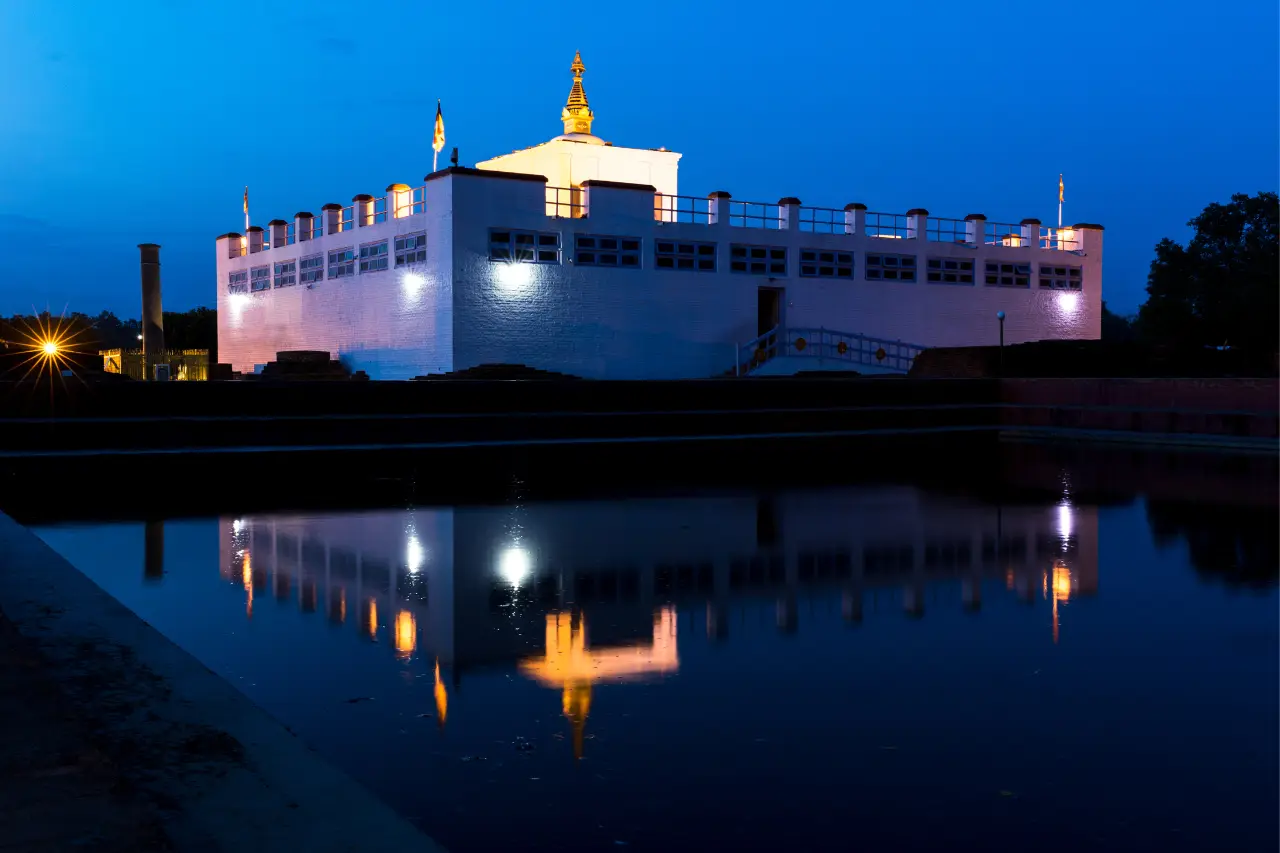
Where the Tathagata was born — Lumbini. Where he awakened — Bodh Gaya. Where he set rolling the Wheel of Dhamma — Isipatana, the deer park at Sarnath. And where he passed into final Nibbana — Kusinara itself. Both are today inscribed on the UNESCO World Heritage list. These, he said, are places a person of faith should see: places that stir samvega, that vertical drop in the chest when the shortness of a life stops being theoretical.
Then came the promise. Whoever dies while journeying to these shrines, with a heart of serene confidence, will at the breaking up of the body arise in a happy destination, a heavenly realm.
Read that slowly, because devotees usually misquote it. The Buddha did not promise a reward for arriving. He said while journeying. The merit is in the going — the intention that got you onto the road, the patience at the checkpoint, the mind that stayed soft through the dust. Arrival is almost incidental, a truth most pilgrims meet around the seventh hour of a drive across the Gangetic plain.
From Four to Eight: How the Attha Maha Thana Took Shape
The eight great holy places — the Attha Maha Thana — are not one scriptural list. They are four plus four. To the four the Buddha named, later tradition added four sites tied to the great wonders of his teaching life, and the eightfold form entered the devotional imagination of Sri Lanka, Burma, Thailand and Tibet long before it became a tourism phrase.
Sravasti, where the Twin Miracle silenced the rival teachers and where the Buddha kept twenty-four rainy seasons. Sankasya, where he descended from the Tavatimsa heaven after teaching the Abhidhamma to the deva who had been his mother. Rajgir, where the maddened elephant Nalagiri knelt instead of trampling. And Vaishali, where a monkey offered honey and where, three months before the end, he calmly relinquished the will to live on.
Each addition carries a distinct devotional flavour — power, compassion, gratitude, acceptance. Reading the attha maha thana significance as a deliberate spiritual sequence rather than a checklist changes how the journey feels; the complete Attha Maha Thana pilgrimage route maps that devotional logic against the actual geography.
What Punya Actually Is
The Pali tradition names three grounds of merit-making: dana, generosity; sila, moral conduct; bhavana, mental cultivation. Pilgrimage is unusually rich because it engages all three at once, and for days on end rather than the length of a ceremony.
Dana is the lamp lit at Sarnath, the robes offered at a Kushinagar monastery, the coins pressed into a caretaker’s hand at Sankasya where almost nobody comes. Bhavana is the hour at Vulture Peak, doing nothing at all.
This is why the tradition treats punya from pilgrimage as different in kind from merit made at home. Ordinary life lets us practise generosity on Sunday and forget it by Tuesday. Two weeks on the road does not permit that.
The Pilgrim’s Inner Preparation
First-time pilgrims prepare a great deal for the body and almost nothing for the mind. The traditional preparation is modest and takes a week.
- Take the Five Precepts formally before departure and hold them for the journey. This single act reframes travel as practice.
- Set an intention and name the person it is dedicated to — a parent, a teacher, someone recently gone. Shared merit is not diminished.
- Learn the story attached to each place before you stand in it. A stupa you know nothing about is a mound of brick; the same stupa with its story will undo you.
- Decide in advance that heat, dust and delay are part of the practice, not interruptions to it.
- Leave the camera in the bag for the first hour at each site.
Guidance matters more than people expect. A guide who can recite the relevant sutta passage where it happened is doing something categorically different from one reciting dynasties, which is why devotees increasingly ask for pilgrimage arrangements led by dhamma-literate guides rather than a sightseeing driver.
Merit Is Made in the Heart, Not in the Kilometres
A question comes up in almost every group: is a pilgrimage covering only three sites somehow incomplete? The word the suttas use for the required state of mind is pasada — clear, settled confidence. No quota is attached to it.
A devotee who reaches Sarnath alone, spends a morning there in genuine pasada and dedicates the merit to their mother has done more than one who photographs all eight while arguing about the schedule. The eight are an ideal, not a threshold.
Still, the sites reinforce one another; birth at Lumbini means more once you have stood where he died. Anyone weighing one long journey against several shorter visits will find the trade-offs set out by the pilgrimage specialists at Prime Value Tours, who have sequenced these routes for over two decades.
Frequently Asked Questions
Does visiting the 8 great holy places really generate merit?
Yes, according to the Mahaparinibbana Sutta — but the condition is the state of mind, not the distance covered. The Buddha specified a heart of serene confidence while journeying. Merit arises from faith and generosity practised along the way, not from arrival.
Which four places did the Buddha himself recommend?
Lumbini, his birthplace; Bodh Gaya, where he attained enlightenment; Sarnath, where he first taught; and Kushinagar, where he entered final Nibbana. The other four — Sravasti, Sankasya, Rajgir and Vaishali — come from later tradition as the miracle sites.
Can I make merit if I can only visit one or two sites?
Yes. There is no scriptural minimum. One site visited with genuine devotion, precepts observed and merit dedicated to others fulfils the spirit of the teaching. Many devotees return over several years and complete the eight gradually.
What should I do at each holy place to make the visit meaningful?
Offer lamps, flowers or incense; recite a short homage; sit quietly for fifteen minutes; recall the event that happened there; then formally share the merit with a named person. The sequence takes under an hour and transforms the visit.
Do I need to be a Buddhist to benefit from the pilgrimage?
No. The sites receive Hindu, Jain and unaffiliated visitors daily, and the qualities the Buddha described — reverence, urgency about impermanence, generosity — are not sectarian. Many Indian devotees come as an extension of an existing devotional life.
Plan Your Yatra With Care
A badly arranged pilgrimage becomes a test of endurance rather than devotion, and a mind spent on logistics has little left over for pasada. Prime Value Tours Pvt. Ltd. — a Government of India approved, IATO-member company in Varanasi — arranges journeys across all eight great holy places with dhamma-literate guides, monastery-friendly scheduling and India–Nepal ground support. Write to info@primevaluetours.com or call +91-9794122849 to plan a yatra shaped around practice.
Prime Value Tours Pvt. Ltd.
GST: 09AZPPS0293R1Z7 | PAN: AZPPS0293R
Website: https://www.primevaluetours.com | info@primevaluetours.com | +91-9794122849
Government of India approved | IATO Member | Varanasi, Uttar Pradesh, India