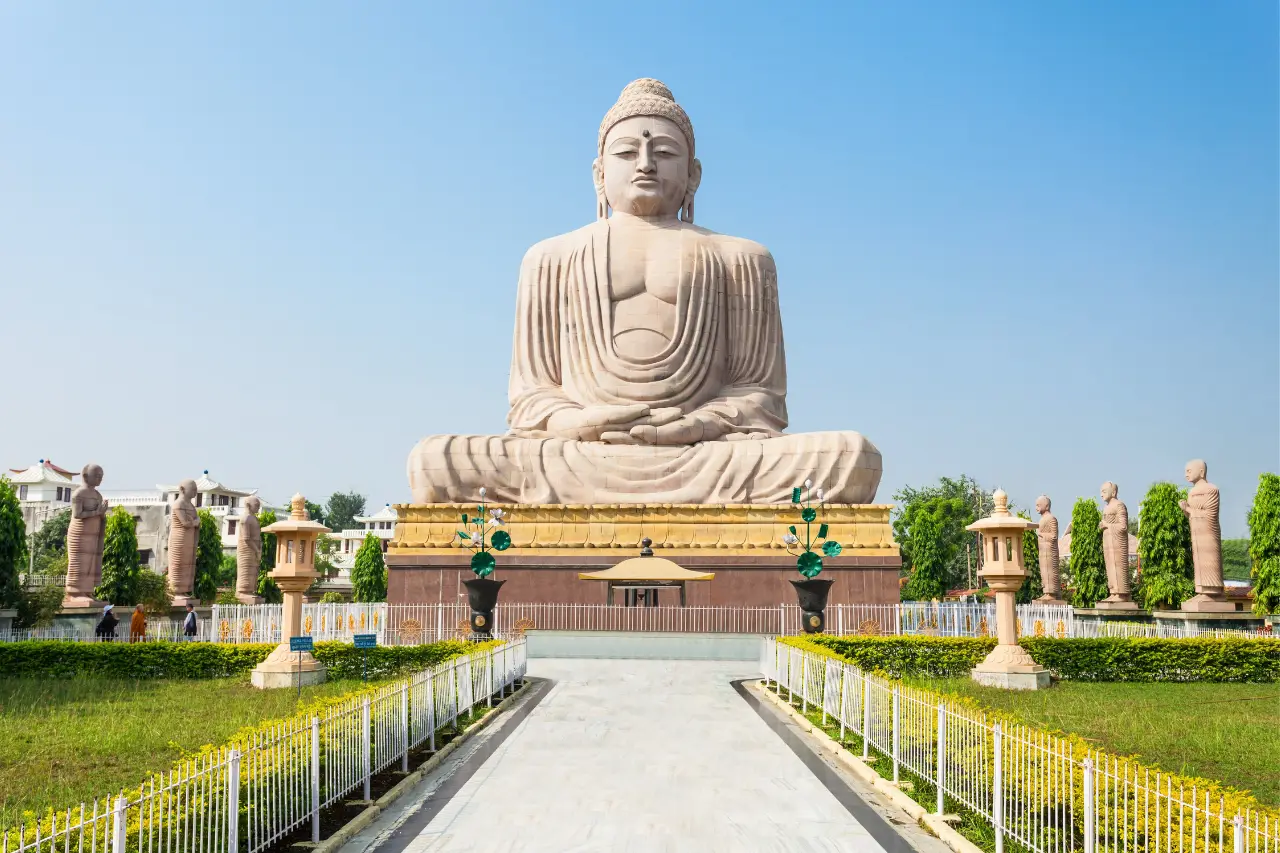
Mahabodhi Temple: The Sacred Heart of Buddhist Pilgrimage
There are temples you visit, and there are places you arrive at with your whole being. The Mahabodhi Temple in Bodh Gaya is the second kind. This is the ground where Siddhartha Gautama, after years of searching, sat beneath a tree and did not rise until he had seen the truth of suffering and its end — and became the Buddha. For millions of devotees, a journey to Bodh Gaya is not sightseeing. It is coming home to the exact place where liberation became possible for the first time in this age.
Why Bodh Gaya Is the Holiest Site in Buddhism
Among the four great pilgrimage sites tied to the Buddha’s life — Lumbini where he was born, Sarnath where he first taught, Kushinagar where he passed into parinirvana, and Bodh Gaya where he awakened — it is Bodh Gaya that most devotees name as the heart of the four. Birth, teaching, and death mark the boundaries of a human life. Enlightenment is the reason any of it mattered. The Mahabodhi Temple Complex, standing on this spot in Bihar for well over two thousand years in one form or another, holds that memory in brick and stone the way few places on earth hold anything.
Emperor Ashoka is said to have raised the first shrine here in the 3rd century BC, not long after his own transformation from a ruler of conquest to a patron of dhamma. The temple that stands today, rebuilt in the 5th and 6th centuries, rises close to 50 metres above the ground it protects. In 2002, UNESCO recognised the complex as a World Heritage Site — a formal acknowledgement of something Buddhist devotees had never needed convincing of.
Inside the Mahabodhi Temple — Sacred Spaces and Symbolism
Enter the complex and the main tower draws the eye first, but it is what stands directly behind it that pilgrims come for: the Bodhi Tree, a living descendant of the very tree under which the Buddha sat, its branches spreading wide over a raised platform where countless devotees have meditated before you. Beneath and around the tree, seven distinct spots mark the seven weeks tradition says the Buddha spent in the area immediately following his awakening — one where he simply stood and gazed at the tree in gratitude, another where he walked in slow, deliberate meditation, each carrying its own quiet teaching about what enlightenment actually looked like in practice, day by day.
Circumambulation — walking clockwise around the temple and the tree — is the most visible devotional act here, and you will find pilgrims from Sri Lanka, Myanmar, Tibet, Thailand, Japan, and across the Buddhist world moving in that same slow circle, prayer beads in hand, some silent, some chanting softly. Join them, and you are not observing a tradition — you are inside it.
The Bodhi Tree and the Vajrasana — Where Enlightenment Happened
At the base of the Bodhi Tree sits the Vajrasana, the “diamond throne” — a stone slab marking the precise spot where the Buddha is believed to have been seated at the moment of enlightenment. There is a particular stillness that gathers around this spot regardless of how many people surround it. Devotees leave offerings of flowers, light butter lamps, and many simply sit facing the throne in silent meditation, sometimes for hours. If your journey to Bodh Gaya allows for nothing else, sitting quietly near the Vajrasana for even twenty unhurried minutes is, for many pilgrims, the single moment the entire trip was made for.
Merit-Making and Devotional Practices at Mahabodhi
Merit-making at Bodh Gaya takes many forms — offering flowers and incense at the temple, sponsoring butter lamps that burn through the night, donating robes or alms to the monastic community, or simply sitting in meditation within sight of the tree under which liberation first became possible. Many Thai devotees carry the practice of tak bat, offering food to monks, into their time here, while others focus on quiet personal prayer or chanting the traditional Pali verses of homage. There is no single correct way to make merit at Bodh Gaya. The temple has held two thousand years of devotion in every form the Buddhist world has offered it, and it holds yours the same way.
Planning Your Spiritual Journey to Bodh Gaya
A pilgrimage to the Mahabodhi Temple deserves unhurried time rather than a single rushed stop between destinations. Many devotees set aside two to three full days — enough for an early, quiet morning visit to the temple before the crowds gather, time to visit the monasteries built by different Buddhist nations around the complex, and space simply to sit with what the place means to you. November through February, when Bihar’s heat has broken and mornings are cool, tends to be the gentlest season for extended time at the temple. Prime Value Tours has spent over 25 years designing exactly this kind of unhurried Bodh Gaya journey for Thai and international Buddhist pilgrims, with Thai-speaking, dhamma-literate guides who understand the difference between a tour and a pilgrimage.
Frequently Asked Questions
Why is the Mahabodhi Temple so important to Buddhists?
It marks the exact spot where Siddhartha Gautama attained enlightenment and became the Buddha, making it the spiritual origin point of the entire Buddhist path.
What is the Vajrasana at Bodh Gaya?
The Vajrasana, or “diamond throne,” is the stone slab beneath the Bodhi Tree believed to mark the precise seat of the Buddha’s enlightenment.
Is the Bodhi Tree at Bodh Gaya the original tree?
The present tree is a direct descendant of the original, grown from cuttings preserved and returned to this site across many centuries.
What is the best way to make merit during a Bodh Gaya visit?
Common practices include offering flowers and butter lamps, circumambulating the temple, sitting in meditation near the Vajrasana, and giving alms to the monastic community.
Begin Your Pilgrimage
If Bodh Gaya has been calling you, do not let it remain a someday plan. For guidance on planning a properly paced pilgrimage — including a full Bodh Gaya tour package built around the Mahabodhi Temple visit and the wider Buddhist pilgrimage circuit connecting India’s four great holy places — reach out to Prime Value Tours, whose Thai-speaking guides have walked this path with pilgrims for over 25 years.
/bodh-gaya-blog — Read more devotional reflections on Bodh Gaya
Further reading: UNESCO World Heritage listing for the Mahabodhi Temple Complex